How to Improve Sales Coaching: A Practical Guide for Managers
Sales coaching improves when it happens on a fixed rhythm, works on real deals and tracks one skill per rep. It fails when it is squeezed in between pipeline reviews and admin. The fix is rarely a better framework. It is more protected time and better material to coach from.
This guide is for sales leaders and founders who sell. You may run a team on HubSpot or Pipedrive. You may lead an agency, consultancy or IT firm where the founder still closes deals. You get a cadence, a session format, a way to measure results and a way to free the hours coaching needs.
TL;DR
- Coach weekly if you can. MySalesCoach’s 2026 research links weekly coaching to 76% quota attainment, against 56% for monthly and 47% for quarterly or less.
- Split every 1:1 in two. Spend the first 20 to 30 minutes on one skill and the rest on pipeline.
- Coach from real deals, call recordings and CRM notes, not from generic scenarios.
- Measure rep improvement on one tracked skill over 90 days, not only revenue.
- Give managers their time back. Sonta AI is an agentic CRM that finds opportunities and moves them forward, so the busywork that eats coaching hours shrinks.
Table of Contents
- What sales coaching is, and what it is not
- Why coaching fades after a few weeks
- Set a cadence you can keep
- Structure the 1:1 so coaching comes first
- Coach from real deals
- Measure whether coaching is working
- Find the hours coaching needs
- A 30-day plan to improve your coaching
- Perspective: what we see in coaching
- Try it on your own pipeline
- FAQ
- Sources
What sales coaching is, and what it is not
Sales training teaches a method to a group. Sales coaching applies that method to one person’s live deals. The manager asks questions, watches how the rep sells and agrees one thing to change.
That difference matters for small teams. You rarely have a training department. You have a manager, or a founder, and a handful of reps. Coaching is how the method sticks.
Seismic’s UK coaching guide lists what a working programme includes:
- A defined cadence and framework.
- Clear objectives tied to business outcomes.
- A personalised path for each rep.
- A way to measure results.
None of this needs software. All of it needs time that is protected in advance.
Why coaching fades after a few weeks
Most managers believe in coaching. Most still skip it. The reason is usually rhythm, not intent.
MySalesCoach’s Richard Smith puts the quota gap between weekly and infrequent coaching down to a “broken rhythm” in its guide to coaching rhythm. The same guide says coaching must be separated from pipeline time inside the 1:1. Ascent Trainings makes a similar point in its cadence guide. Coaching that depends on finding a gap in the diary tends not to last past the first quarter.
Three causes show up again and again:
- The 1:1 becomes a status update. Pipeline takes the whole slot.
- The manager has no material. Deal notes are thin, so coaching stays vague.
- The manager has no time. Admin, forecasting and chasing updates fill the week.
The third cause is the one most guides skip. We come back to it below.
Set a cadence you can keep
Start with a rhythm that survives a busy month. A smaller rhythm kept every week beats an ambitious one that lapses.
A minimum workable rhythm
MySalesCoach describes a floor of a 15-minute weekly check-in plus a 30-minute focused session every two weeks. For a team of six to eight reps, that is roughly 90 minutes of manager time a week, per its rhythm guide. That figure is a company’s recommendation, not a standard. Use it as a starting point.
A fuller rhythm
QUOTA Training suggests a weekly 30 to 45 minute 1:1 on skills, a monthly team workshop and a quarterly skills assessment, per its coaching guide. Ascent Trainings suggests more frequent coaching for new reps, about every two weeks, and every four to six weeks for established reps.
Pick by team size and rep experience:
| Team situation | Starting cadence |
|---|---|
| Founder selling with one or two reps | Weekly 30-minute session each |
| Manager with 4 to 8 reps | 15-minute weekly check-in plus a 30-minute session every two weeks |
| New reps in their first months | Fortnightly deep-dive at the least, plus quick debriefs after calls |
| Experienced reps on a steady quota | Every four to six weeks, with the weekly check-in kept |
Whichever you choose, put recurring invites in the diary. Treat them like client meetings. Do not move them for pipeline reviews.
Structure the 1:1 so coaching comes first
A good session is short and has one subject. QUOTA Training’s 45-minute layout is a useful template:
- 10 minutes: review the action item from last time.
- 20 minutes: go deep on one call recording or one deal.
- 10 minutes: role-play the moment that went wrong.
- 5 minutes: agree one specific, observable action for next week.
Pipeline review is a separate meeting or a separate half of the slot. Keep it out of the first 20 to 30 minutes.
Let the rep do the talking
Ascent Trainings notes that if the manager talks more than the rep, the session is drifting toward a status update. Ask, then wait. “What would you do differently on that call?” produces more change than a verdict.
Pick one skill at a time
Ten pieces of feedback change nothing. One does. Choose from what you see in real work:
- Opening a first conversation without sounding like a template.
- Qualifying budget and decision-makers early.
- Handling a stalled deal with a clear next step.
- Following up after a meeting within a day.
- Asking for the next step at the end of every call.
Write the skill down. Next week, check it first.
Coach from real deals
Generic role-plays teach generic habits. Coaching lands when it uses the rep’s own deals.
Sales Growth Company describes a coaching system built on review tools such as call recordings, deal notes and CRM entries. It also says coaching activity should sit in the same systems as pipeline and forecasting. That is the practical point for teams on HubSpot or Pipedrive. Your CRM is your coaching evidence, but only if reps keep it current.
Good coaching material answers three questions about a deal:
- What happened, and when?
- What did the rep do next?
- Why was that the right or wrong moment to act?
When notes are missing, managers fall back on opinions. When the record is complete, they coach on facts.
Coach the timing of outreach, not only the wording
Many reps lose deals before the first reply. They contact people at a random moment with a generic message. A better habit is to reach out when there is a reason to talk. A recommendation request on LinkedIn, a new decision-maker, a company hiring or a past contact changing jobs are all reasons to talk. They are not proof that someone wants to buy.
Sonta’s Signal Agent watches public LinkedIn activity for these moments. It shows each reason with a link, so a manager and a rep can check what happened before anyone writes. Fit and intent are scored separately, so you can see whether a company suits you apart from whether the moment is timely. That gives a coaching conversation something concrete: “Why did you contact this person now?” has an answer you can open and read.
A note on rules. LinkedIn has its own rules on automation, and you should read them before you automate anything on the platform. Email rules differ by country too. Business email needs prior consent before first contact in Germany, the Netherlands, Denmark and Poland. In South Africa, POPIA applies to first-contact rules. Coach reps on the rules of each market they sell into.
Measure whether coaching is working
Revenue is the end result, but it moves slowly and has many causes. Track earlier signs as well.
Measures that move sooner
Seismic’s guide recommends before-and-after comparisons on revenue, conversion rates, average deal size and sales cycle length. It adds skill assessments and rep feedback. SalesFit’s manager scorecard guide goes further and proposes eight metrics, including coaching sessions logged, ramp time and forecast accuracy.
For a small team, five are enough:
- Sessions held against sessions planned. This is your honesty check.
- Improvement on the tracked skill. One skill per rep, reviewed every 90 days.
- Conversion between stages. Look at the stage your coaching targets.
- Ramp time for new reps. How long until they hold a normal pipeline.
- Rep retention. People stay where they are developed.
SalesFit proposes rep improvement over 90 days on a tracked skill as the primary manager metric. It suggests that if fewer than 40% of reps improve, the cause is more likely coaching quality than rep talent. That is a vendor’s benchmark, so use it as a prompt for review, not a target.
What the survey data suggests
MySalesCoach’s 2026 research of more than 3,700 sales professionals links coaching frequency to results. Quota attainment was 76% for weekly coaching, 56% for monthly and 47% for quarterly or less. The same research found that 74% of SDRs receiving frequent, high-quality coaching expect to stay in 12 months, against 34% of those with little or none. These are survey associations from one publisher, not proof of cause. They do point the same way as the rest of the evidence: frequency matters.
Ambition’s Summer 2026 benchmark report, a survey of 312 sales leaders, reports a widening gap in coaching consistency between teams. Consistency is the lever you control.
Keep forecasts in the conversation
Coaching and forecasting share the same evidence. A rep who cannot say why a deal will close in the quarter needs coaching on qualification. Our guide to sales forecast accuracy shows how to measure it. Our piece on sales rep productivity covers the activity side.
Find the hours coaching needs
Here is the part most coaching advice leaves out. Managers do not skip coaching because they dislike it. They skip it because the week is full of other work.
The usual drains are easy to name:
- Chasing reps to update the CRM.
- Preparing for meetings from scattered notes.
- Writing follow-ups by hand.
- Rebuilding the pipeline view before every review.
- Switching between a CRM, a sequencer, a LinkedIn tool and a signal tool.
Every hour recovered from these can go into a coaching slot. That is a better plan than asking managers to work longer.
Consistent follow-up is part of the coaching job
A large share of coaching is about follow-through. Reps know they should follow up, then the week gets busy. Tools that handle timely follow-up and reminder sequences help keep the basics consistent, which leaves the 1:1 for judgement. AI sales agent software covers how this kind of automation fits a sales process. Our own piece on AI follow-up automation covers the CRM side.
Where we fit
Sonta replaces a CRM, an email sequencer, a LinkedIn outreach tool and a signal tool in one app. AI agents research prospects, follow up, prepare meeting briefs and keep records current. The CRM keeps itself up to date, so reps do not spend Friday afternoon on data entry. Our overview of what an AI agent does in sales explains the idea.
You decide which steps need your approval. A manager can let agents draft and wait for sign-off on anything that goes to a client, or loosen that once the team trusts the output. Email sequences are native and written from the moment a signal fires. Email sequences are unlimited.
Compare this fairly with what you might consider instead. HubSpot and Pipedrive are strong CRMs with mature reporting and large ecosystems, and many teams run them well. Attio is a flexible, modern CRM. Gojiberry AI, HeyReach and Instantly each focus on one slice of outreach. An AI SDR tool such as Artisan or 11x is one agent that stops at the meeting. Sonta has an agent for every step and is the CRM too. A spreadsheet is cheap and flexible but depends on someone updating it. A lead-generation agency or a new salesperson adds capacity but not a shared record you can coach from.
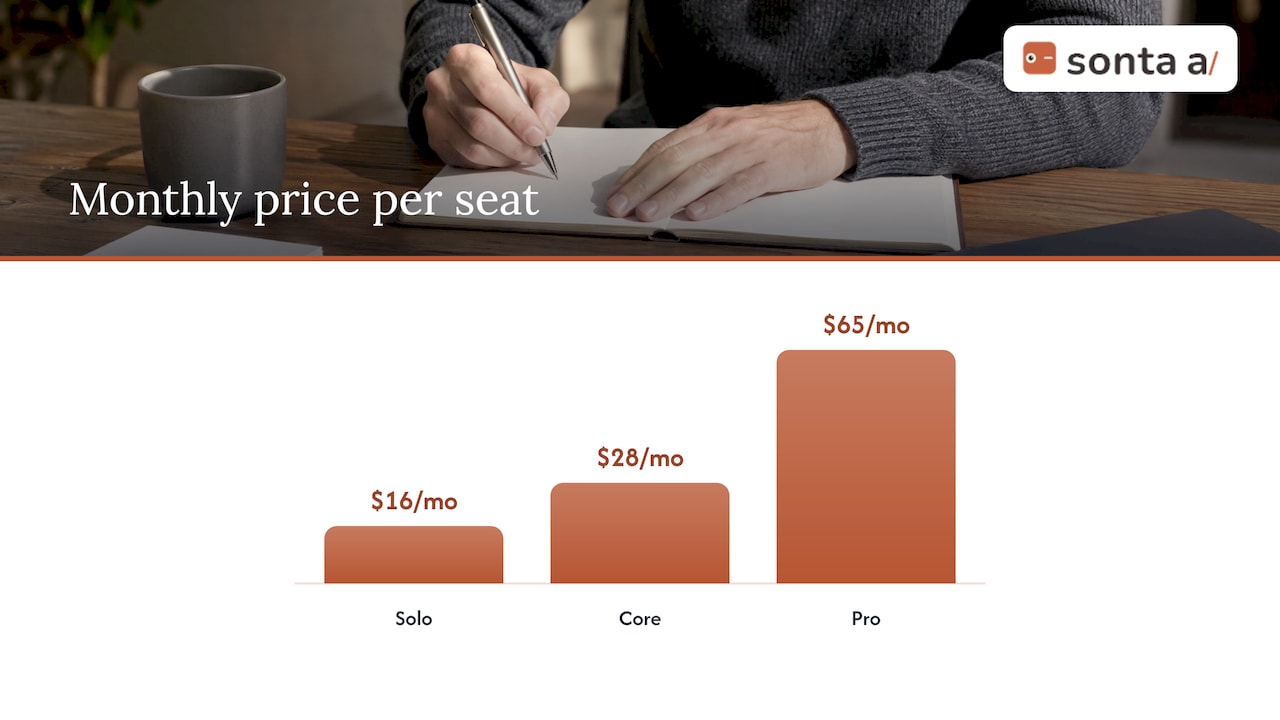
On cost, the Sonta value calculator found a median 36% less than the cheapest equivalent stack (Sonta value calculator, list prices read 17-18 Oct 2026). Plans start from $16 a month per seat on Solo, $28 on Core and $65 on Pro. LinkedIn accounts are billed per seat. Signal packs start from $29 a month. See Sonta pricing for the current plans.
A 30-day plan to improve your coaching
You can start this month.
- Week 1. Block recurring coaching slots for the next quarter. Name one skill per rep.
- Week 2. Run the first 1:1 in the four-part format. Coach from one real deal each.
- Week 3. Check the action items first. Fix the gaps in your CRM notes that made coaching hard.
- Week 4. Count sessions held against planned. Note what pushed any out and remove it.
At day 90, review improvement on each rep’s tracked skill. Adjust the cadence by results, not by feel.
Perspective: what we see in coaching
We run our own sales on Sonta. The lesson for us is simple. Coaching needs evidence, and evidence needs a record that is complete.
When a deal has a reason attached, such as a recommendation request or a new decision-maker, a coaching conversation starts from facts. You can open the link, read what happened and ask the rep what they did with it. That is a better 1:1 than “how is the pipeline?”
We built Sonta as an agentic CRM that finds opportunities and moves them forward, so managers spend less time on busywork and more on the people who sell. The customer decides which steps need approval. The same rules hold when the team works from Claude or ChatGPT through our MCP server. AI runs on your own keys from Anthropic, OpenAI, Google or OpenRouter, with no markup on AI. Data is stored in the EU under GDPR.
Coaching is a habit. Remove what blocks the habit, and the habit holds.
Pavel
Try it on your own pipeline
If your coaching sessions keep losing to admin, look at where the hours go. Sonta brings signals, sequences, reply handling, meeting booking and the CRM into one app. Agents prepare meeting briefs and keep records current, which gives managers a clean deal history to coach from. Look at Sonta’s agentic CRM to see how it works. Book a demo and leave with your first leads.
FAQ
How often should a sales manager coach each rep?
Weekly is the best-supported answer. MySalesCoach’s 2026 research links weekly coaching to higher quota attainment than monthly or quarterly coaching. If that is too much, start with a 15-minute weekly check-in and a 30-minute session every two weeks. New reps need more.
How do I make sales coaching more effective?
Keep each session to one skill and coach from real deals. Let the rep talk more than you do. End with one observable action and check it first next time.
How do I measure sales coaching effectiveness?
Track improvement on one named skill per rep over 90 days, alongside conversion between stages, ramp time and retention. Count sessions held against sessions planned. Revenue matters, but it moves slowly and has many causes.
What should a manager coach on first?
Choose the skill that affects the most deals right now. For many teams that is qualification, follow-up or opening a conversation at the right moment. Pick it from what you see in real calls and deal notes.
Sources
- The Ultimate Sales Coaching Guide for 2025, Seismic UK
- Sales Coaching Statistics 2026, MySalesCoach
- How to Build a Sales Coaching Rhythm That Actually Sticks, MySalesCoach
- Sales Coaching Guide, QUOTA Training
- Sales coaching cadence, Ascent Trainings
- How to Build and Operationalize a Sales Coaching System, Sales Growth Company
- Sales Manager Scorecard: 8 Metrics, SalesFit
- Sales Coaching Benchmark Report, Ambition