AI Sales Personalization: How to Do It Without Backfiring
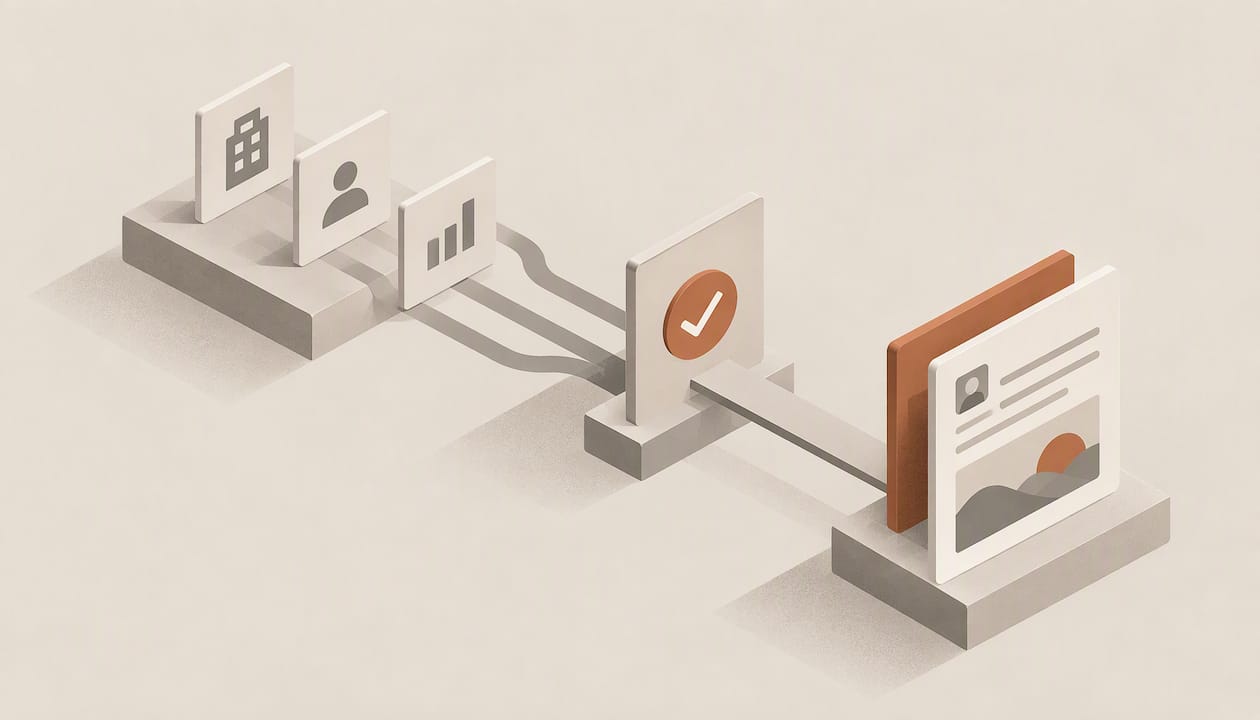
AI sales personalization means using models to tailor outreach, follow-up and call prep to a specific prospect’s situation, drawing on CRM records, past conversations and public signals, rather than swapping a first name into a template. It works when three things are in place: accurate underlying data, a defined level of personalization your buyers will accept, and a human review step before anything high-stakes goes out. Without them, it produces fluent but generic messages at higher volume.
This guide covers what the evidence says, which kinds of personalization pay off, where the risks sit, and how to set up a workflow your reps will trust.
TL;DR
- Personalization in sales is the tailoring of each interaction to a prospect’s behavior, context and needs. AI makes it feasible across thousands of contacts, but only if the CRM data feeding it is current.
- Reported gains are real but vendor-heavy: treat the 2-3x reply-rate figures as directional, and test against your own baseline.
- Moderate, contextual personalization helps. Intrusive use of personal data can reduce purchase intent.
- Keep a human in the loop for first drafts that carry your brand, and be explicit about what AI is allowed to send alone.
- Workflow design matters more than tool choice: McKinsey identifies workflow redesign as the attribute most tied to EBIT impact from generative AI.
Table of Contents
- What AI sales personalization actually covers
- What the numbers suggest (and how to read them)
- Three levels of personalization, and which one to automate
- Where personalization backfires
- The step most teams skip: fix the data first
- Design the workflow, not just the prompt
- Choose the model for the task
- Start where AI adoption is strongest
- What we have seen: a perspective on personalization
- Measuring whether it works
- Where Sonta AI fits
- Common mistakes to avoid
- FAQ
- Sources
What AI sales personalization actually covers
HubSpot defines sales personalization as tailoring every interaction in the sales cycle to a prospect’s specific situation, based on behavior, context and needs, instead of sending the same message to every contact. AI extends that definition in three directions.
- Research. Models summarize a company’s recent news, hiring, product changes and prior conversations into a short brief before a rep writes or calls.
- Drafting. Models produce a first version of an email, a LinkedIn note or a follow-up that references that research.
- Timing and sequencing. Agents decide when a prospect should hear from you again and with what, based on what has happened in the account.
The scale is the difference. Advanced sales automation platforms now let businesses create individualized interactions for thousands or even millions of customers simultaneously, a shift the same analysis calls hyper-personalization. Scale is also the risk: a mediocre idea repeated 10,000 times is a larger problem than the same idea sent 50 times by hand.
What the numbers suggest (and how to read them)
Several figures circulate, and their quality varies.
| Claim | Source | How to treat it |
|---|---|---|
| 95% of seller research workflows will start with AI by 2027, up from under 20% in 2024 | Gartner, as cited by MarketsandMarkets | A forecast, useful for direction rather than planning |
| Organizations investing in AI report 13-15% higher revenue and a 10-20% boost in sales ROI | McKinsey data, same page | Self-reported and averaged across firms; your result depends on execution |
| Personalized experiences correlated with 4X demo bookings and 48% higher CTA conversion | ON24 2025 Digital Engagement Benchmarks | A correlation within webinar and event marketing, not a controlled test of outbound email |
| AI-personalized outreach gets 2-3x the response rate of template emails | HubSpot, as compiled in a 2026 statistics roundup | Secondhand compilation; verify against your own sequences |
The pattern across these is consistent: personalization correlates with better engagement, and the strongest evidence is for relevance, not volume. None of them promises a specific lift for your team. The only number that matters is the reply and meeting-booked rate of your personalized sequence against a control group of your own template, run on the same segment in the same weeks.
Three levels of personalization, and which one to automate
Not every message needs the same depth. A practical way to allocate AI effort:
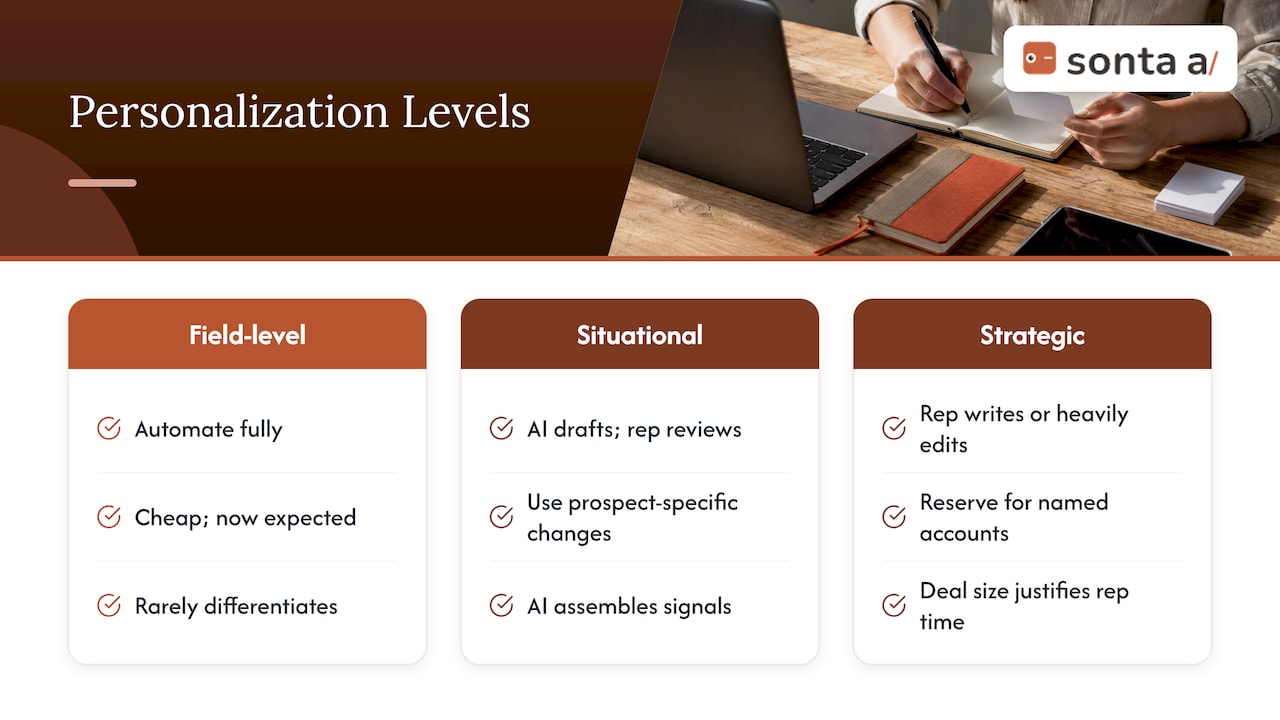
Level 1: field-level. Name, company, role, industry, recent funding. Cheap, fully automatable, and by now expected. It rarely differentiates anything.
Level 2: situational. A reference to something specific that changed for the prospect: a new leadership hire, a product launch, an earlier conversation with a colleague, a pricing page visit. This is where AI earns its keep, because assembling these signals manually is what reps skip when they are busy.
Level 3: strategic. A point of view on the account’s problem, tied to your offer and the buying committee. Use AI to prepare the brief and propose angles, but a rep should write or heavily edit the message.
Most teams get the best return by automating Level 1 fully, using AI to draft Level 2 for review, and reserving Level 3 for named accounts where the deal size justifies rep time.
Where personalization backfires
More personalization is not always better. A 2025 study on the personalization backfire effect examines why personalized marketing fails and finds that its benefits can be negated when privacy concerns are active. The practical reading: moderate, contextual personalization lifts conversion, while tactics that expose how much you know about a person can reduce purchase intent.
For sales teams, that translates into a few rules:
- Reference business context (company news, role-relevant challenges, content they engaged with on your site) rather than personal details (family, home location, private social activity).
- Avoid implying surveillance. “I saw you read our pricing page three times” lands badly; “teams evaluating X usually ask about Y” does not.
- Prefer signals the prospect knowingly gave you or published professionally.
Trust is also affected by how human an AI interaction pretends to be. Research on AI chatbot anthropomorphism frames it as a dilemma for marketers, because human-like features can help sales but also create concerns about effectiveness. If an agent is talking to a prospect directly, calibrate how human it sounds and be clear that it is an AI assistant.
Disclosure matters too. An academic paper on AI personalization and consumer trust argues that AI-generated content often scores lower on authenticity than human-created content, and that failing to disclose AI involvement can hurt brand perception. That work looks at e-commerce consumers, so B2B buyers may react differently, but it is a reasonable reason to keep a person accountable for what is sent in your name.
The step most teams skip: fix the data first
Personalization quality is capped by record quality. If contact titles are two years old, the last call was never logged and the deal stage was updated from memory, a model will confidently write about a situation that no longer exists. That produces the most damaging kind of error: a specific, wrong reference.
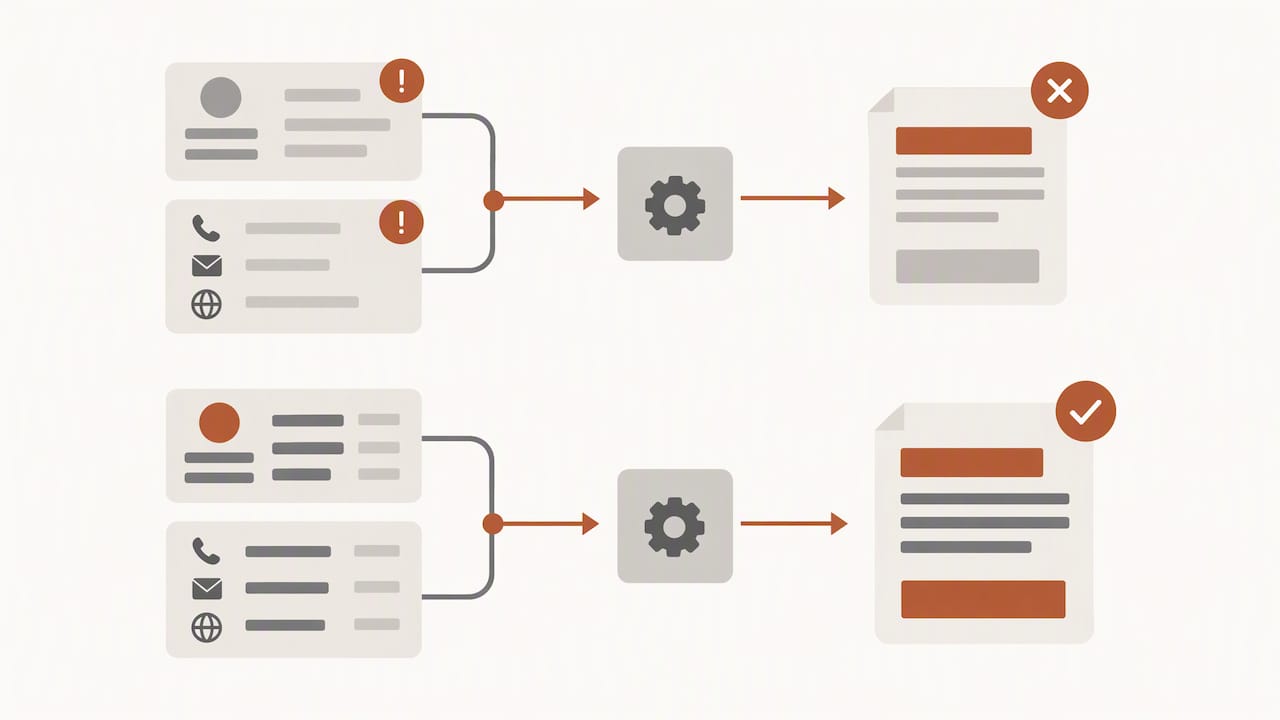
This is the core weakness of CRMs that depend on manual entry. Reps update records late, partially or not at all, and every downstream AI step inherits the gaps. An AI-native CRM approaches this differently: records update themselves from emails, calls and meetings, so the context available to a drafting agent is the current state of the account rather than the last time someone had time to type.
A quick audit before you switch personalization on:
- Pull 25 active opportunities and compare the CRM’s contact roles, next steps and last-activity dates with what the rep says is true.
- Count how many have a logged conversation from the last 30 days.
- Check that suppression information (opt-outs, do-not-contact, existing customers) is stored in fields the automation can read.
- Decide which fields the AI may use in outreach and which are internal only.
If more than a handful fail, fix capture before you automate drafting.
Design the workflow, not just the prompt
McKinsey’s research on generative AI finds that redesigning workflows, rather than only deploying tools, is the attribute most associated with a material EBIT impact. The same page cites expert views that AI should shift human effort toward high-value work such as relationship building instead of simply automating data entry.
A workable personalization flow has five stages:
- Trigger. A signal creates work: a new inbound lead, a stalled deal, a meeting that just ended, a champion changing jobs.
- Context assembly. The agent pulls the account record, prior threads, product usage or site activity, and relevant public information.
- Draft. The model writes a message or call brief using a defined persona, tone guide and list of approved claims.
- Review. A rep approves, edits or rejects. Early on, nothing sends without approval.
- Learn. Replies, meetings booked and edits made by reps feed back into prompts and rules.
On review, the guidance from practitioners is consistent: AI can analyze large datasets and produce solid first drafts, but messaging needs human review for brand alignment and tone, and unconstrained autonomy tends to produce robotic copy. The remedy is guardrails, such as persona-specific pain points, banned phrases and approved proof points, rather than a ban on automation.
Our own deeper guides cover the mechanics: personalized AI outreach for B2B reply rates, automated follow-up emails that book meetings and how to build a reliable CRM workflow builder.
Choose the model for the task
Personalization involves different jobs with different needs. Summarizing a long email thread, classifying lead intent, drafting a first-touch message and checking a draft against brand rules do not all need the same model. Picking per task lets you use a faster, cheaper model for classification and a stronger one for writing, and it avoids locking your sales motion to one vendor’s roadmap. Ask any platform you evaluate whether you can assign models by step, and whether AI and automation usage is metered, since metering changes the economics of running agents on every account.
Start where AI adoption is strongest
Analysts note that AI lead scoring and qualification agents are gaining traction, but adoption drops off further down the funnel, with most organizations focusing first on prospecting and early-stage triage before negotiation. They also point to explainable scoring, where reps can see why a lead was ranked as it was, as a condition for rep trust (MarketsandMarkets).
That suggests a sensible rollout order:
- Weeks 1 to 2: account research briefs and meeting prep, internal only, no prospect-facing risk.
- Weeks 3 to 6: drafted follow-ups after calls and demos, reviewed by the rep.
- Weeks 6 and on: first-touch outreach to a defined segment, with a control group.
- Later: staged autonomy for low-risk, high-volume steps such as scheduling confirmations, expanding only as approval rates and reply data justify it.
The staged autonomy model for AI sales agents follows that logic, and our explainer on what an AI agent in sales is describes the building blocks.
What we have seen: a perspective on personalization
We think most AI personalization projects fail upstream of the message. Teams spend weeks tuning prompts while the CRM still depends on reps to log what happened. The model then writes beautifully about stale facts. When records update themselves, the personalization problem shrinks to a smaller question: which context should the agent use, and who approves what goes out?
We also think the goal is misdescribed. Personalization is not about making a prospect feel individually watched. It is about removing the cases where a rep asks a question the prospect already answered, or follows up two weeks late with a generic bump. The best use of AI here is boring and operational: remember everything, surface the relevant piece at the right moment, and draft the next step so the rep can spend their time on the conversation.
The last point is accountability. Every agent should have an owner on the sales team, a clear scope, and a way for reps to see what it did and why. If nobody can explain why a message was written the way it was, it should not be sending.
— Pavel
Measuring whether it works
Track a short list of metrics and compare against a control:
- Reply rate and positive reply rate by segment, not blended.
- Meetings booked per 100 contacts.
- Rep edit rate: the share of drafts changed materially. A falling rate means prompts and guardrails are working; a rising one means data or instructions are drifting.
- Time from trigger to first touch, especially for inbound leads and post-meeting follow-ups.
- Opt-out and complaint rate. If this rises as personalization deepens, you have crossed the line described above.
- Data freshness: the share of active opportunities with a logged touch in the last 30 days.
Give each test enough volume to mean something, and change one variable at a time: data source, tone, length or call to action.
Where Sonta AI fits
Sonta AI is an agentic CRM built for AI-first go-to-market teams: records update in real time, customizable agents handle lead qualification, follow-up, account prep, scheduling and pipeline work, and models can be chosen per task. We do not meter AI or automation usage. Industry blueprints exist for real estate, recruitment, auto retail and professional services.
Plans start at 16 USD per month per seat for Solo, 28 USD for Core and 65 USD for Pro, with Enterprise priced on request; current details are on the pricing page. If you are not sure where your own process leaks time or data, the AI Efficiency Diagnostic is a 30-minute session that identifies operational leakages in your stack before you commit to anything. You can also read who Sonta AI is for and when it is not a fit.
Common mistakes to avoid
- Personalizing before segmenting. A sharp message to the wrong buyer is still wasted. Start with a defined ideal customer profile.
- Letting the model invent. Provide approved facts, case references and claims. Instruct the agent to leave a line out when it lacks a verified fact.
- Treating all signals equally. A funding round says more than a generic post.
- Ignoring follow-up. Most meetings come from the second or third touch, so connect personalization to your follow-up automation.
- Skipping the control group. Without one, you will credit AI for seasonal changes.
FAQ
Does AI personalization actually increase reply rates?
Often, yes, but published figures such as 2-3x come mostly from vendor-adjacent compilations and vary by segment and baseline. Run your own test, with a control group on the same list, before drawing conclusions. Gains tend to come from relevance of the signal, not from the volume of personalized fields.
How much personal data is too much?
Research on the personalization backfire effect shows that intrusive use of personally identifiable information can reduce purchase intent when privacy concerns are triggered. Stick to professional and company context, and avoid details a prospect would not expect you to know. Your legal or privacy team should confirm what data you may use under the rules that apply to your contacts.
Should reps review AI-written messages?
For first-touch and strategic accounts, yes, at least until approval rates are consistently high. Practitioners recommend human-in-the-loop review for tone and brand alignment. Low-risk steps like scheduling confirmations can move to autonomous sending sooner.
Where should a team start with AI in sales?
Start with research and meeting prep, then post-call follow-up, then outbound to a limited segment. This mirrors where analysts see adoption strongest: prospecting and early-stage triage rather than negotiation.
Sources
- Next-Generation Sales Automation: AI and Machine Learning Integration, MarketsandMarkets
- ON24 2025 Digital Engagement Benchmarks Report
- 27 AI Sales Statistics Every B2B Leader Should Know in 2026
- Sales personalization beyond the prospect’s first name, HubSpot
- Triggering the Personalization Backfire Effect, PMC
- The AI chatbot anthropomorphism dilemma