Operational Leakage Analysis for Ops: Turn Variance Into Fast Fixes

Operational leakage analysis is the structured review of where expected revenue or budget disappears between a deal, a delivery and a payment. It identifies hidden loss, quantifies its impact in dollars, and ranks fixes by recovery and effort. Teams combine variance analysis, reconciliation dashboards, process mining and AI diagnostics to find leaks that month-end reviews miss.
TL;DR:
- Stripe’s guide cites an EY estimate of losses up to 5% of earnings; treat it as context, not a target, and measure your own rate.
- Use contract based variance checks for billing errors, event log mining for approval gaps, and reserve targeted audits for a specific, high value hypothesis.
- Before analysis, align contract, billing, usage, and event data for the same frozen period, then confirm event logs include timestamps and user IDs.
- Rank findings by expected recovery, repair effort, and confidence; assign one owner, track detection and recovery times, and fix high confidence, low effort leaks first.
Table of Contents
- Why operational leakage matters to operations and finance
- Where leakage comes from: common types and root causes
- Detection techniques: variance analysis, dashboards, process mining, audits and AI
- How to run an operational leakage analysis: a step-by-step playbook
- Measuring, prioritizing and estimating ROI from leakage findings
- Prevention: control design, operational efficacy and governance
- How AI diagnostics and automation speed detection and recovery
- Author perspective: pragmatic rules for ops leaders
- Run the diagnostic and capture the recovery
- FAQ
- Sources
Why operational leakage matters to operations and finance
Leakage rarely announces itself. It shows up as a slightly weaker margin, a cash forecast that keeps missing, or a growth target that needs more pipeline than the plan assumed. Because the losses are spread across many small transactions, each one looks immaterial while the total is not.
Stripe describes revenue leakage as expected income that slips away through issues like uncollected billing, underpricing or unrecovered costs, and its guide cites up to 5% of earnings lost to leakage, a figure it attributes to EY. Treat that as industry context, not a benchmark for your own business: your number depends on billing complexity, contract variety and how many systems touch a transaction.
Revenue leakage means expected income that never arrives, and the fastest way to see it is a real-time comparison of expected versus actual revenue. That comparison is the core idea behind every technique later in this article.
The signals that should trigger an analysis tend to be operational, not financial:
- Invoices that are repeatedly corrected and reissued
- Adjustments posted after the books close that nobody can explain
- Customer disputes that trace back to wrong rates, quantities or terms
- High manual rework, where staff re-key or patch data between systems
- Renewals or usage that finance cannot match to a contract
Any one of these has an innocent explanation. A cluster of these signals can mean a handoff is broken somewhere, and that is where you start looking.
Where leakage comes from: common types and root causes
Leakage maps to process failures, so the quickest way to find it is to match symptoms to the stage of the process where they originate.
Billing and pricing failures. Invoices go out with wrong quantities, expired rates or missing line items. Discounts approved for one deal get applied to a whole customer, or never expire. In SaaS, usage that is never metered, or metered late and never backfilled, is a classic quiet loss.
Contract and entitlement mismatches. What a customer pays for and what they receive drift apart. A customer upgrades a plan in the product but not in billing, or keeps premium features after a downgrade. Services firms see the same pattern as scope creep delivered but never billed.
Handoff and integration gaps. A deal closes in the CRM, but terms are retyped into billing. Each retyping is a chance to lose a clause, a fee or a renewal date. FAIR-CAM guidance recommends analyzing controls as an interdependent system rather than one at a time, and it points to integration consistency as a high-leverage place to look, since leaks cluster where systems hand data to each other.
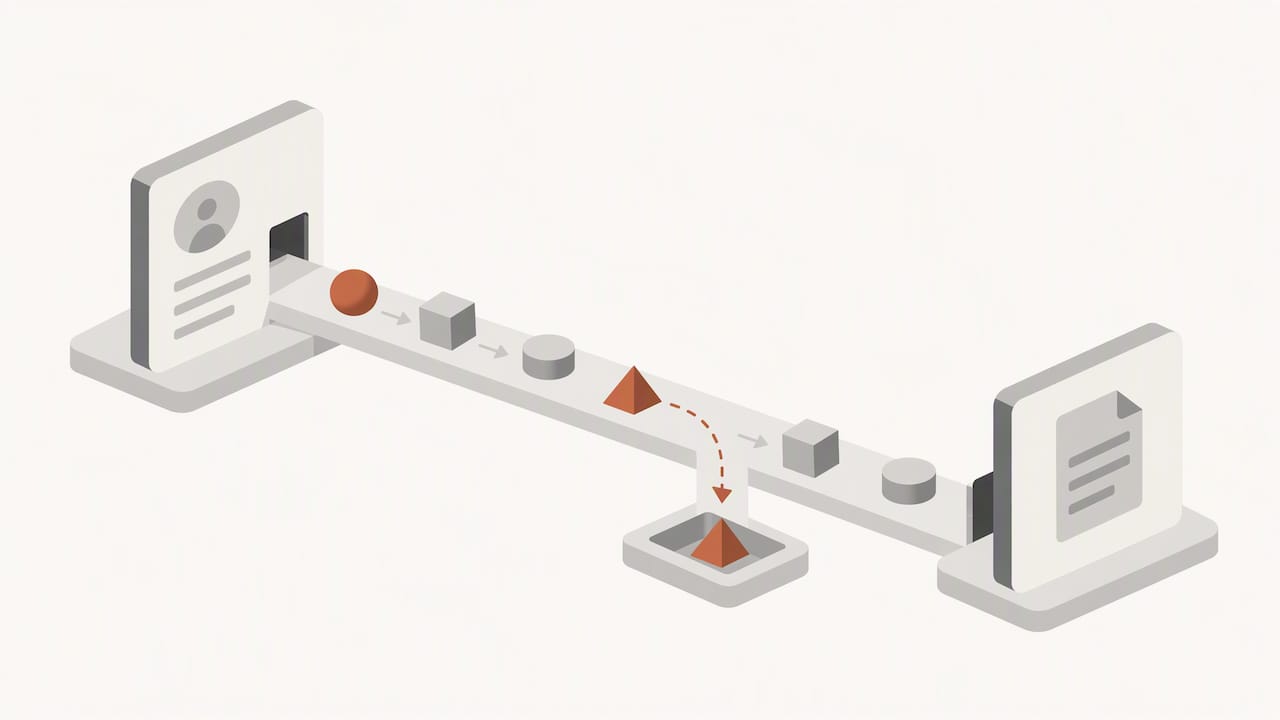
Procurement losses. Duplicate vendor payments, missed rebates and credits that nobody claims. These hide well because the cost side of the ledger gets less scrutiny than revenue.
Where each type tends to appear:
- SaaS: unmetered usage, stale discounts, plan changes that never reach billing
- Services: unbilled hours, out-of-scope work, delayed invoicing that turns into write-offs
- Product operations: price-list mismatches, shipping or returns not recharged, supplier overbilling
When you scope an analysis, pick the one or two types that match how you actually earn money. A broad hunt across everything produces a long list and no recovered dollars.
Detection techniques: variance analysis, dashboards, process mining, audits and AI
No single technique catches everything. The useful question is which one fits the loss you suspect and how quickly you need an answer.
Variance analysis sets an expected value (contracted price times delivered quantity, say) and compares it with what was billed or collected. The skill is in the baseline: a variance only means something if the expectation is built from contracts and usage, not from last month’s results. Recurring variances in one direction usually point to a process cause, while random noise in both directions is normal.
Real-time reconciliation dashboards run the same expected-versus-actual logic continuously. Stripe recommends these reconciliation dashboards to catch losses earlier, and early detection is the main reason to prefer them over periodic reviews: a leak found early costs less than one left until a periodic review.
Process mining rebuilds what actually happened from event logs. A field study of auditing found that process mining of event logs surfaced anomalies such as payments without approval and segregation-of-duty violations that conventional audit procedures had missed. Because it examines the full population of transactions rather than a sample, it exposes nonconforming paths and timestamp oddities. A separate auditing case study lists variant, segregation-of-duty, personnel and timestamp analyses as typical outputs, with a caveat that the process must be digitized enough to mine.
Forensic and targeted audits suit complex cases: a disputed contract family, a vendor you suspect of overbilling, a region with unusual write-offs. They are slow and expensive, so aim them at a hypothesis that cheaper methods have already narrowed.
AI and automation agents monitor transactional flows continuously, flag anomalies and recommend corrective steps. One internal-audit case study describes an operational leakage detection agent that combines machine learning, rules and workflow automation to identify, prevent and recover loss in near real time. The value is speed from detection to remediation, not magic: it still depends on clean contract and usage data.
How to choose:
- Suspect a recurring billing error: start with variance analysis on a contract-based baseline
- Want early warning: build expected-versus-actual dashboards
- Suspect control gaps or approval bypasses: run process mining on event logs
- Have a specific, high-value hypothesis: commission a targeted audit
- Have high volume and many systems: add AI-based anomaly detection
Pro Tip: Start with a single dashboard that compares contracted revenue to invoiced revenue for your top customers. It can often find the first leak before any other tool is configured.
How to run an operational leakage analysis: a step-by-step playbook
A repeatable sequence keeps the work from sprawling. This one fits most teams:
- Scope and set materiality. Choose the revenue stream or cost category, and agree on the dollar threshold below which a leak is logged but not chased.
- Collect the data. Pull sales records, billing runs, contracts, event logs, inventory movements and vendor payments for the same period.
- Run variance reconciliations. Compare expected to actual line by line, and tag every gap with a suspected cause.
- Run a process mining pass. Reconstruct the real paths from event logs, and flag skipped approvals, loops and unusual timestamps.
- Triage and estimate. For each leak, record the likely dollar impact and your confidence in it, then choose a few for remediation pilots.
- Fix, then measure. Deploy the change, track recovered revenue, and tighten the control that failed.
Data collection is where most analyses stall, so settle these before you begin:
- Agree on one system of record for contract terms
- Confirm that event logs carry timestamps and user IDs
- Decide who can approve access to billing and vendor data
- Freeze the period under review so numbers do not shift mid-analysis
Teams that want a related measurement discipline can borrow from marketing: this budget-setting workflow shows how to hold spend decisions to a single efficiency metric, which is the same habit that keeps leakage metrics comparable from one period to the next.
Measuring, prioritizing and estimating ROI from leakage findings
A list of leaks is not a plan until each one has a dollar value and an owner. Track a small set of metrics consistently:
- Leakage as a share of revenue: recovered plus unrecovered loss divided by expected revenue
- Time to detect: days from when a leak starts to when you see it
- Time to recover: days from detection to cash in hand
- Average loss per incident: useful for spotting a cheap-to-fix pattern repeated often
Materiality deserves a deliberate decision. Auditors look for items large enough to affect a decision, and also for patterns: a small error repeated across thousands of invoices is material in aggregate even if each instance is not.
For prioritization, multiply three things: expected recovery, ease of fix, and confidence in the estimate. A mid-sized leak with an easy fix and high confidence beats a large leak that needs a multi-system rebuild and rests on a guess. Score each on a simple scale if you want to compare quickly.
To estimate payback, use a worked example with illustrative inputs. Say a stale discount affects several accounts and under-collects money each month, while the fix takes analyst time. Estimate the monthly recovery from the amount under-collected per account and the number of affected accounts, then compare it with the cost of the fix. Replace the inputs with your own, and apply the same three-line logic to every candidate.
Stripe’s guide cites EY’s estimate that companies can lose up to 5% of earnings to leakage, so even a partial recovery is worth a dedicated owner. Use it for context, then replace it with your own measured rate as soon as you have one.
Prevention: control design, operational efficacy and governance
Finding leaks is half the job. Keeping them closed depends on how controls are designed and watched.
FAIR-CAM takes a control-physiology view: instead of listing controls one by one, it examines how interdependent controls and data handoffs behave together. The standard recommends this control-physiology approach because failures concentrate where systems connect. For leakage, that means putting your effort into the CRM-to-billing handoff, not into polishing each system in isolation.
The same framework offers a useful idea: operational efficacy. A control has an intended efficacy (how well it works when everything is in place), a degraded efficacy (how well it works when something is off), and an operational efficacy that depends on how often and how long it runs in the degraded state. The FAIR-CAM overview describes operational efficacy as a function of those factors, so improving variance management raises a control’s real-world value. A reconciliation that fails silently for an extended period is a weak control no matter how good it looks on paper.
Preventive controls worth putting in place:
- Automated reconciliations between contract, usage and invoice
- Entitlement automation, so plan changes flow to billing without retyping
- Segregation of duties on pricing, discount approval and credit issuance
- A monitoring cadence with a named owner and a defined escalation path
- Alerts when a control stops running, not only when it finds a problem
Pro Tip: Log how long each control was down or degraded. That single number tells you which control to fix first.
How AI diagnostics and automation speed detection and recovery
We built the AI Efficiency Diagnostic to shorten the gap between suspecting a leak and knowing where it sits. It reviews how your sales and operations tools are set up and returns prioritized leak candidates, so your team starts with a ranked list rather than a blank spreadsheet. You can see how it works in our sales efficiency audit walkthrough.
Once a candidate is confirmed, automation keeps it from coming back. Patterns we use in our Agentic CRM include:
- Automatic entitlement checks that compare what a customer holds with what they are billed for
- Deduplication of contacts and accounts, which removes a common source of double work and missed follow-up; our guide to deduping before enrichment covers the sequence
- Activity capture that logs calls, emails and meetings without manual entry
- Self-updating records, so the CRM reflects reality rather than the last person who typed
The handoff matters as much as the finding. A diagnostic that ends in a PDF rarely changes anything, so we pass prioritized fixes to implementation sprints or to workflow builders that your team can configure, and we keep the data-governance checks in the loop through our CRM data governance scan.
Author perspective: pragmatic rules for ops leaders
I have watched leakage programs succeed and stall, and the difference is rarely the tooling. The programs that last start with high-confidence, low-effort wins, because an early recovery buys the credibility to tackle the harder systems. Measure the recovery within weeks, and put one person in charge of the whole list, since shared ownership means no ownership.
Hold a regular leakage review with finance and operations in the same room, with escalation thresholds written down before anyone needs them. Then check incentives: if a fix makes someone’s quarterly number look worse, it will quietly be undone. Align the metric with the repair.
— Pavel
Run the diagnostic and capture the recovery
If you suspect leakage in your sales and revenue operations, our AI Efficiency Diagnostic gives you a prioritized view, without a long setup or a consulting engagement. It points to where expected revenue and actual revenue part ways, so you can decide what to fix first.

When a leak is confirmed, we offer ways to close it:
- Workflow build sprints, from $5,000 one-off, to automate the fix
- Full implementation programme, from $8,000 one-off, for a complete rollout
- Migration and data modelling, from $2,500 one-off, to clean up the source of the mismatch
- Industry blueprints, so you start from a working structure instead of a blank page
Plans and service pricing are listed on our pricing page. Book the diagnostic, or request a demo of our Agentic CRM, and we will show you where your own numbers point.
FAQ
What is operational leakage analysis in simple terms?
It is a review of the places where expected money fails to arrive or is spent unnecessarily, such as billing errors, missed charges and duplicate payments. The goal is to find those losses, size them, and decide which to fix first.
What is the most effective method for detecting leaks?
There is no single best method, but real-time expected-versus-actual reconciliation is a strong starting point because it catches losses early. Stripe recommends these reconciliation dashboards for exactly that reason, and process mining adds coverage where controls are suspect.
How long does an operational leakage analysis take?
A focused first pass on one revenue stream can take days, mostly spent gathering clean contract, billing and usage data. A full program across several systems takes longer, which is why a short diagnostic is a practical way to find the first priorities.
How should I prioritize which leaks to fix first?
Rank each by expected recovery, ease of fix and confidence in the estimate. Start with leaks that score well on all three, then move to larger ones that need system changes.
Sources
- Explaining revenue leakage | Stripe
- A Field Study on the Use of Process Mining of Event Logs as an Analytical Procedure in Auditing
- An Overview of FAIR-CAM